THE CHURCH MILITANT
Ephesians 5:11-"And have no fellowship with the unfruitful works of darkness, but rather expose them". This Christian News Blog maintains a one stop resource of current news and reports of its own related to church, moral, spiritual, and related political issues, plus articles, and postings from other online discernment ministries, and media which share the aims to obey the biblical commands to shed light on and refute error, heresy, apostasy, cults, and spiritual abuse.
Among the 16 billboards include the statements “Abortion is a blessing;” “Abortion is sacred;” “Abortion is a family value;” “Abortion is hope;” “Abortion is a second chance;” “Abortion is liberty;” “Abortion is health care;” and “Abortion is good medicine.” VIDEO OF CHRISTIANS WITNESSING IN FRONT OF "PRETERM" FACILITY:
CLEVELAND, OHIO'S LARGEST ABORTION FACILITY "PRETERM" LAUNCHES
republished below in full unedited for informational, educational, and research purposes:
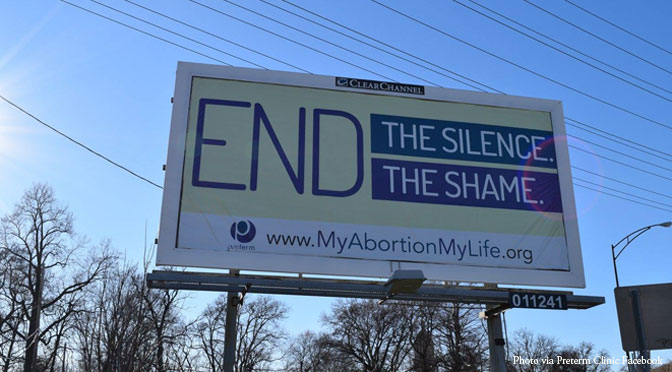
CLEVELAND, Ohio — The largest abortion facility in Ohio has launched a billboard
campaign in an effort to urge readers “to reflect on the powerful role that
abortion plays in people’s lives.”
The facility, called Preterm, has purchased 16 billboard locations around the Cleveland area to “spark conversation” surrounding its belief that abortion is necessary as it allows women to live however they want without a child getting in the way. Preterm offers surgical abortions up to 19 weeks gestation—almost five months—and medication abortions up to nine weeks. “Abortion is a normal and necessary part of people’s lives. People from all walks of life have abortions for many different reasons. And each person’s experience is valid,” the MyAbortionMyLife website reads. “To a parent struggling to make ends meet, abortion may be the best way to love and care for your family. To a young person, abortion may be the chance to graduate. To all of us, abortion is foundational to a just society where we can live life on our own terms,” it asserts.
Each billboard contains a different message in support of abortion, with the phrase “Abortion is” and then a blank that is completed by a thought. Among the 16 billboards include the statements “Abortion is a blessing;” “Abortion is sacred;” “Abortion is a family value;” “Abortion is hope;” “Abortion is a second chance;” “Abortion is liberty;” “Abortion is health care;” and “Abortion is good medicine.”
Preterm has also been urging supporters to share graphics with the same messages on social media, and to also create discussion with the hashtag #MyAbortionMyLife.
However, while some abortion advocates have called the campaign “refreshing,” “beautiful” and “stigma-busting,” others have conversely used the effort as a way to declare that “abortion is murder.”
“Your abortion ends your baby’s life. #MyAbortionMyLife,” one Twitter user wrote.
“There’s no way to change the #abortion narrative. Those 60 million dead babies can’t come back to life. #MyAbortionMyLife,” another wrote.
One even created their own series of statements, including, “Abortion is selfish;” “Abortion is baby-killing;” “Abortion is barbaric;” “Abortion is not an option;” and “Abortion is sin.”
O’Connor
As previously reported, female government leaders have claimed for years that abortion is necessary to allow women to work outside of the home and pursue careers. In the 1992 ruling of Planned Parenthood v. Casey, Supreme Court Justice Sandra Day O’Connor, a Reagan appointee, asserted that abortion has kept women in the workforce.
“The ability of women to participate equally in the economic and social life of the nation has been facilitated by their ability to control their reproductive lives,” she wrote on behalf of the court. “For two decades of economic and social developments, people have organized intimate relationships and made choices that define their views of themselves and their places in society, in reliance on the availability of abortion in the event that contraception should fail.”
In June 2016, while speaking before a gathering of Planned Parenthood supporters, Democratic presidential candidate Hillary Clinton similarly said that she believes legalizing abortion has helped to keep women in the workplace, thereby aiding the economy.
“[Roe v. Wade] transformed [women] because it meant that women were able to get educations, build careers, enter new fields, and rise as far as their talent and hard work would take them—all the opportunities that follow when women are able to stay healthy and choose whether and when to become mothers,” she asserted.
Clinton opined that birth control has likewise helped the economy because it has kept women in the workforce instead of at home raising children.
“Today, the percentage of women who finish college is six times what it was before birth control was legal,” she stated. “Women represent half of all college graduates in America and nearly half our labor force, and our whole economy, then, is better off.”
Talmage
However, Christians have long decried abortion in America as being the savage murder of innocent children. Even in 1872, preacher Thomas De Witt Talmage wrote in his book “The Abominations of Modern Society:
“Herod’s massacre of the innocents was as nothing compared to that of millions and millions by what I shall call ante-natal murders. You may escape the grip of the law, because the existence of such life was not known by society, but I tell you that at last God will shove down on you the avalanche of His indignation, and though you may not have wielded knife or pistol in your deeds of darkness, yet, in the day when John Wilkes Booth and Antony Probst come to judgment, you will have on your brow the brand of murderer.”
In an introductory lecture to his course on obstetrics in 1854, Philadelphia doctor Hugh Lennox Hodge also explained that if a woman were to come to a medical doctor in pursuit of an abortion, “he must, as it were, grasp the conscience of his weak and erring patient and let her know in language not to be misunderstood that she is responsible to her Creator for the life of the being within her.”
“The procuring abortion is ‘a base and unmanly act,’” Hodge also said, quoting in part text from a court ruling of his day. “It is a crime against the natural feelings of man, against the welfare and safety of females, against the peace and prosperity of society, against the divine command ‘Thou shalt not kill.’ It is murder.”
_______________________________________________________
SofTouch Manual Aspiration Method for Early Abortion and Miscarriage BY DR. FLEISCHMAN & STAFF REMOVES YOUR "PRODUCT OF CONCEPTION TISSUE" (A/K/A UNBORN BABY) https://www.earlyabortionoptions.com/
"SOFT TOUCH"-New abortion technique being marketed as “natural” … y’know, because murdering unborn babies is the most natural thing in the world to abortion advocates
republished below in full unedited for informational, educational, and research purposes:
(Natural News) Is taking the life of an unborn baby something that is considered to be “natural?” If you ask the developers of a new device that can supposedly abort a baby in just five minutes, then the answer is yes. The device, officially called SoftTouch, was developed back in the year 2011 by a Harvard-trained physician named Doctor Joan Fleischman. According to EarlyAbortionOptions.com, the procedure is typically used by women who are anywhere from five to ten weeks pregnant, although women who are 12 weeks pregnant can also use SoftTouch so long as a doctor says it is okay.
The abortion procedure uses a small aspirator and a flexible tube to remove the fetus from the mother’s womb in just three to five minutes. The website touts that SoftTouch produces minimal discomfort for the woman, and even describes the procedure as “noninvasive and natural,” as if ripping an unborn child out through the birth canal like it’s a cancerous tumor is something that is “natural.” Nevertheless, the website talks about SoftTouch as if it’s the greatest invention mankind has ever created, claiming that it has numerous advantages over the abortion pill and that “it is completed in one visit and our patients leave the office knowing that the pregnancy is over.” The truth is that regardless of the methods used to perform an abortion, the act of ripping a baby out of the womb and then justifying it by claiming that it’s “not a human” or “just a clump of cells” is sick and highly unethical. Indeed, the way in which some people (particularly those on the left) talk about abortion as if it’s as natural as putting peanut butter on a slice of toast is sick, as well as a clear sign that our country, in many ways, is spiraling down a path of moral decay. (Related: Abortion is a big business: Nearly $1 billion per year is generated from murdering babies.) Last week, The Daily Wire reported on a college student from the University of Tennessee, Knoxville who admitted that taking the life of a two-year-old would be perfectly okay. The student’s argument, which was made on camera, was centered on the twisted idea that there’s “no difference” between killing a tree and killing a two-year-old child, since, as the student put it, both the child and the tree lack the ability to communicate like an adult and therefore lack sentience.
“The fact of the matter is, if without communication, we have no way of knowing if you’re sentient or not,” the student explained in the video, which was filed by a Students for Life Regional Coordinator named Brenna Lewis. “I mean, it’s no different than this tree. It’s alive. But is it sentient?” When Lewis pointed out the obvious flaw in comparing a two-year-old human being with a tree, the student responded with more nonsense. (Related: The goal of the abortion industry is to save money through depopulation and make a profit through the sale of baby body parts.)
“Okay, can the two-year-old talk to me?” he asked. “In some instance, I’m fairly certain that is. But generally speaking the child still has the inability to communicate. And until we determine that as such, at what point does sentience become an issue, we can’t really debate whether or not that is the situation or not.”
Obviously, there is a severe lack of respect for human life that is spreading like a plague throughout the United States, and it appears to be getting worse. As conservatives, we must restore the idea that the lives of the unborn are precious, and that they deserve to be protected. After all, the basis for any civil society is how well its people treat the weakest and most vulnerable among them.
Follow more news on the abortion industry at Abortions.news.
republished below in full unedited for informational, educational, and research purposes:
The desire for freedom can never be entirely extinguished from the human heart.
“How Iranian protesters are skirting the government’s tech clampdown to continue their fight,” by Hollie McKay, Fox News, January 5, 2018:
Protesters have taken to the streets in Iran,
demonstrating against the country’s clerical regime. As many
participants are being arrested, and even killed, there is a growing
call of appreciation and more support from the Trump administration. While the already repressive Iranian government works to further shut
down social media that helps fuel communications among thousands of
protestors, the predominantly young, college-aged crowds in the street
are scrambling to stay ahead with a variety of counter-censorship
maneuvers.
“Iranians are used to changing. Remember we were the first ones using
Twitter for political purposes in the Green Revolution in 2009, when
Twitter was still largely unknown,” one activist, Ali, told Fox News.
“Then it was blocked. Then Facebook came and then it was blocked. Now
Instagram and Telegram.”
Iranian officials are blocking access by essentially building a
“massive firewall,” according to Dave Chronister, managing partner of
Parameter Security and an “ethical hacker” who has worked with the U.S
government. But access hasn’t been completely cut – leaving the
protesters room to maneuver. “The Iranian government is blocking access to certain IP ranges
altogether (such as news sites) and at the same time they are also
allowing certain sites to be accessed,” said Chronister. “But they are
using content filtering to block what they consider to be risky or
subversive, for example Twitter hashtags. So the Iranian activists are
using different ‘tunneling’ methods to hide their traffic through
encryption and therefore bypass government restrictions – for instance,
they use a Virtual Private Network (VPN).”
The VPN encrypts web traffic, so it obscures information that makes it harder for Iran’s security apparatus to catch or block.
One activist in Tehran told Fox News he has downloaded about 10 VPNs,
and just one is working. While VPNs can be quickly shut down when
detected, activists can just as quickly scramble to find more. Some have
also since turned to other platforms such as the anonymity network Tor,
which allows users to conceal their location.
But it remains a dangerous game.
“Iranian activists are using a ton of proxies to hide their true
identities. A proxy is basically an outside IP address that masks your
true one, so if an Iranian citizen uses a proxy to access the internet,
he or she will appear to Iranian authorities to be coming from another
country like Australia or Hong Kong,” said Jeff Bardin, CIO of
Treadstone 71 and a former Air Force intelligence operative.
“This makes it difficult for the Iranian government to block the
connection without closing off the internet completely. But using a
proxy doesn’t mean you are completely safe, the Iranian government has
the ability to shut them down and find out who is using them.”
Should that shut-down happen – which is of increasing concern since
the Revolutionary Guards Commander Mohammad Ali Jafari said Wednesday
that “when cyberspace was controlled, we saw a decrease in sedition,”
the activists have a backup plan.
“Every day we know at 5pm to gather in identified places: the main
square in every city and the four main squares in Tehran,” one protest
leader in Tehran told Fox News in a telephone interview on Thursday.
Protesters suffered a setback when access to the encrypted phone
messaging app Telegram was shut down last weekend. The app is hugely
popular in Iran, given there are more than 40 million registered
accounts there. Dubai-based Telegram founder Pavel Durvov claimed his
app was blocked after he refused to adhere to the regime’s demands to
shut down certain channels used by “peaceful protesters.”…
republished below in full unedited for informational, educational, and research purposes:
No, non-Muslims always get the brunt of it. This grotesque attempt
yet again to portray Muslims as victims after a jihad attack is just the
latest of many, as this is a tried and tested response straight out of
the playbook for Muslim spokesmen in the West, but it nonetheless still
amounts simply to an attempt to deflect attention from where it should
be. Authorities should be challenging the Muslim community in Ireland
today about the extent of sympathy for the Islamic State within their
communities, since the Islamic State has called for stabbing attacks in
the West. They should be calling upon Muslims in Ireland to begin to
back up their words of condemnation for the attack with real action to
counter the idea that it is a righteous deed to commit violence against
the kuffar. Instead, as always, we get this disgusting victimhood
posturing. Remember: no Muslims were stabbed in Ireland, nor should they
be, but from the tenor of this article, you might get the impression
that an “Islamophobe” had targeted Muslims in Ireland. It’s a total
inversion of reality.
“Muslims call on Irish people to resist blaming Islam for attacks,” by Sorcha Pollak, Irish Times, January 5, 2018 (thanks to The Religion of Peace):
Fazel Ryklief watched in dismay as news of the Dundalk
attack that left one man dead and two injured spread on Wednesday
morning. Meanwhile, a tide of anti-immigrant abuse directed at Muslims
had begun to swell on social media . “In the end, irrespective of whether he was Syrian or Egyptian, it
all came down to him being a Muslim. Islam always gets the brunt of it,”
said Ryklief, who works at the Islamic Foundation of Ireland in Dublin.
“I want to stop feeling guilty about being a Muslim every time
someone with a Muslim name does something like this,” he told The Irish
Times, adding that he was not surprised that some media outlets
immediately concluded that the alleged attacker was a Syrian.
The majority of Muslims condemn all violence, and abhor the killing
of anyone, he went on: “As soon as the police mention the words
‘terrorist attack’ people go mad. They don’t wait to establish the
reasons.”
However, the “terrorist” rhetoric that has surrounded Muslims in
recent years is having this effect, feared Dr Saud Bajwa, a consultant
at Galway University Hospital and spokesman for the Galway Islamic
Cultural Centre.
Change in attitudes
Dr Bajwa says the vast majority of Irish people treat Muslims with
respect but that he has noticed a change in attitudes in recent years.
“There is no doubt that these days people are quick to jump to
conclusions,” he said.
“On our side, we’re always praying sincerely that the latest attack
is not a Muslim thing. I still think there is a wider good out there in
Ireland but there are always people who look at me with doubt because I
am a Muslim.”
“This fear is from the unknown – when everyone is shouting that these
people are dangerous, even the mildest unfamiliarity can create a sense
of fear. I love this society I’ve chosen to live in.
“But if we don’t block this stereotyping and if decent people don’t
get involved and ask people to use their intellect rather than jumping
to conclusions, things will get worse,” said the Galway-based
consultant.
Ali Selim, spokesman for the Islamic Cultural Centre in Dublin’s
Clonskeagh, says Irish people should take heed of their own recent
history with Britain before drawing conclusions about members of the
Muslim community.
“It was just yesterday that if you crossed the Border and spoke in an
Irish accent you’d immediately have your papers checked. Even today
people still talk about the cartoons of Irish people in the British
press. I believe this history will stop most people from stereotyping.”…
republished below in full unedited for informational, educational, and research purposes:
 WASHINGTON — The U.S. Department of State has
announced its annual designation of “Countries of Particular Concern”
(CPC) based on observance of ongoing violations of religious freedom.
“In far too many places around the globe, people continue to be
persecuted, unjustly prosecuted or imprisoned for exercising their right
to freedom of religion or belief,” spokesperson Heather Nauert said in a
statement on Thursday.
“Today, a number of governments infringe upon individuals’ ability to
adopt, change or renounce their religion or belief, worship in
accordance with their religion or beliefs, or be free from coercion to
practice a particular religion or belief.”
The International Religious Freedom Act of 1998 requires the U.S.
secretary of state to name each year the countries that have been the
most egregious violators of religious freedom. Secretary Rex Tillerson
has decided to re-designate from the year prior the countries of Burma,
China, Eritrea, Iran, North Korea, Sudan, Saudi Arabia, Tajikistan,
Turkmenistan and Uzbekistan as CPCs.
Pakistan has also been placed on a “special watch list” due to ongoing persecution throughout the past year. As previously reported,
the U.S. Commission on International Religious Freedom (USCIRF) had
recommended last April that the Department of State designate 16
countries as CPCs, 10 of which have been cited by the government for
years. The six that the Commission sought to be added were the Central
African Republic, Nigeria, Pakistan, Russia, Syria and Vietnam.
While it applauded the Department of State for again adding the 10
designations to the CPC list, the Commission expressed disappointment
that Tillerson only added Pakistan to a watch list, and that the other
countries of recommendation were not mentioned at all.
“The designation of these countries is a key step in ensuring
continued U.S. engagement in support of international religious freedom.
Although USCIRF agrees with the 10 countries on the State Department’s
list, it does not go far enough. Secretary Tillerson should have also
designated the Central African Republic, Nigeria, Pakistan, Russia,
Syria, and Vietnam,” Chairman Daniel Mark said in a statement.
“Pakistan continues to harass its religious minorities, has
state-sanctioned discrimination against groups such as the Ahmadis, and
tolerates extra-judicial violence in the guise of opposing blasphemy,”
he explained. “As USCIRF has said for many years, Pakistan should be
designated by the State Department as a CPC.”
As previously reported, the Commission outlined in its 2017 report it
is illegal in Pakistan to defile the Koran or to blaspheme the Islamic
prophet Muhammad. Those who violate the law suffer devastating
consequences, such as life imprisonment or the death penalty.
“Forced conversion of Hindu and Christian girls and young women into
Islam and marriage, often through bonded labor, remains a systemic
problem,” the Commission also noted. “Hindu and Christian women are
particularly vulnerable to these crimes because of the societal
marginalization of and lack of legal protections for
religious minorities, combined with deeply patriarchal societal and
cultural norms.”
While Pakistan did not make it to the State Department’s CPC list
this time, most persecution watch groups agree with the U.S. government
that countries such as North Korea, Iran and Sudan are among the worst
violators of religious freedom.
“In this totalitarian communist state, Christians are forced to hide
their faith completely from government authorities, neighbors and often,
even their own spouses and children,” Open Doors USA said in its 2017 “World Watch List”
in which it named North Korea as the most dangerous place to live as a
Christian. “Entire Christian families are imprisoned in hard labor
camps, where unknown numbers die each year from torture, beatings,
overexertion and starvation.” “In Iran, Christianity is considered a Western influence and a threat
to the Islamic identity of the Republic. Converts to Christianity from
Islam make up the largest group of Christians and experience the most
persecution,” it also outlined. “Arrest and violence are commonplace for
anyone engaged in Christian ministry or evangelism.”
State Department Spokesperson Nauert said that the purpose of naming
certain countries of concern is to focus on the work needed to effect
change in those nations.
“The protection of religious freedom is vital to peace, stability,
and prosperity. These designations are aimed at improving the respect
for religious freedom in these countries,” she outlined. “We recognize
that several designated countries are working to improve their respect
for religious freedom; we welcome these initiatives and look forward to
continued dialogue. The United States remains committed to working with
governments, civil society organizations, and religious leaders to
advance religious freedom around the world.”
republished below in full unedited for informational, educational, and research purposes:
At last, some common sense in U.S. foreign policy. This means several hundred million dollars that the Taliban and the Haqqani Network won’t get. We can only hope that there will be much, much more of this sort of thing to come.
“U.S. suspends at least $900 million in security aid to Pakistan,” by Arshad Mohammed and Jonathan Landay, Reuters, January 4, 2018 (thanks to Inexion):
WASHINGTON (Reuters) – The United States said on Thursday
it was suspending at least $900 million in security assistance to
Pakistan until it takes action against the Afghan Taliban and the
Haqqani network militant groups. The U.S. State Department announced the decision, saying it reflected
the Trump administration’s frustration that Pakistan has not done more
against the two groups that Washington says use sanctuaries in Pakistan
to launch attacks in neighboring Afghanistan that have killed U.S.,
Afghan and other forces.
The department declined to say exactly how much aid would be
suspended, saying the numbers were still being calculated and included
funding from both the State and Defense departments.
Pakistan has long rejected accusations that it fails to tackle the
militants battling the Kabul government and U.S.-led foreign forces in
Afghanistan, from sanctuaries on its side of the border.
On Friday, Pakistan criticized what it called “shifting goalposts” and said the U.S. suspension of aid was counter-productive.
U.S. officials said two main categories of aid are affected: foreign
military financing (FMF), which funds purchases of U.S. military
hardware, training and services, and coalition support funds (CSF),
which reimburse Pakistan for counter-terrorism operations. They said
they could make exceptions to fund critical U.S. national security
priorities.
CSF funds, which fall under Defense Department authority, are covered
by the freeze, said Pentagon spokesman Commander Patrick Evans, saying
Congress authorized up to $900 million in such money for Pakistan for
fiscal year 2017, which ended Sept. 30. None of that money has yet been
disbursed.
The freeze also covers $255 million in FMF for fiscal year 2016,
which falls under State Department authority and whose suspension has
already been announced, as well as unspecified amounts of FMF that went
unspent in earlier fiscal years.
Briefing reporters, U.S. officials stressed the suspension did not
affect civilian aid to Pakistan and that the money could go through if
Islamabad took decisive action against the groups.
“Our hope is that they will see this as a further indication of this
administration’s immense frustration with the trajectory of our
relationship and that they need to be serious about taking the steps we
have asked in order to put it on more solid footing,” a senior State
Department official told reporters.
“We’re hoping that Pakistan will see this as an incentive, not a punishment,” he added.
The Trump administration briefed Congress on its decision on Wednesday….
republished below in full unedited for informational, educational, and research purposes:
He says Pakistan has been getting less than $10 million a year. USAID
says that the U.S. gave Pakistan $778 million in 2016 alone. And then
Abbasi added that whopper about Pakistan being on the “forefront” of the
fight against jihad terror. “War is deceit,” said Muhammad. In any
case, Abbasi, fine. Just send it all back, and the U.S., if common sense
prevails, won’t send any more.
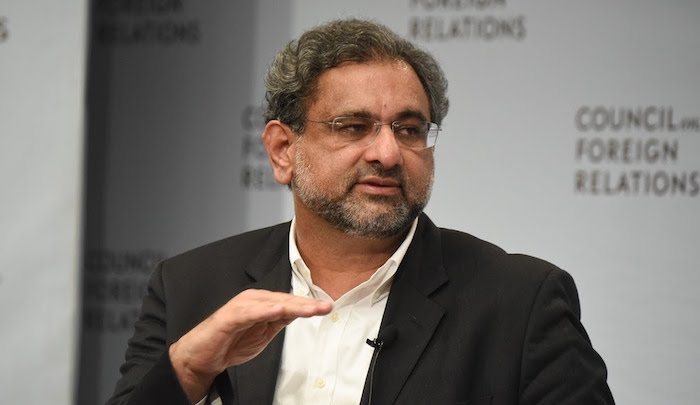
“Pakistan PM calls US aid ‘insignificant’ as Trump threatens to cut it off,” by Haroon Janjua and Julian Borger, Guardian, January 5, 2018:
Pakistan’s prime minister, Shahid Khaqan Abbasi, has
declared himself mystified by US threats to cut off funding, saying that
US financial assistance was “very, very insignificant” and that
Pakistan was “on the forefront of the war on terror”.
In an interview with the Guardian, Abbasi said that reports that the
US was considering cuts of up to $2bn in security assistance were
bewildering because the total aid Pakistan – civilian and military –
actually received was a tiny fraction of that amount.
“I am not sure what US aid has been talked here,” Abbasi said in his
office in Islamabad. “The aid in the last five years at least has been
less than $10m a year. It is a very, very insignificant amount. So when I
read in the paper that aid at the level of $250m or 500 or 900 has been
cut, we at least are not aware of that aid.”
Donald Trump used his first tweet of 2018 to threaten to withhold aid
to Pakistan because of what he called its “lies and deceit” over
terrorism, claiming: “They give safe haven to the terrorists we hunt in
Afghanistan, with little help.” The president has that the US had
“foolishly” given Pakistan $33bn over the past 15 years.
According to the US Agency for International Development, the US gave
$778m to Pakistan in assistance in 2016, of which 35% was military and
the rest economic….
Wilhelmus Valkenberg is a Professor of Theology and Religious Studies at
the Catholic University of America. He completed his Ph.D. in Theology
at Catholic Theological University of Utrecht, the Netherlands. He
worked as an Associate Professor of Theology at Loyola University
Maryland and Radboud Universiteit Nijmegen. He authored World Religions
in Dialogue: A Comparative Theological Approach and Sharing Lights on
the Way to God.
Some quotes from Dr. Valkenberg:
"What is important in the way in which both Fethullah Gulen and the
Hizmet tradition engages in this dialogue with others is exactly this
exactly combination of being rooted in their own tradition and working
from their own tradition and taking the fruits of their own tradition
and trying to open that up to the broader public."
"Gulen, somewhere in his writings says, if you take that as a kind of a
hermeneutical key to interpret the Quran, then you can say, well, that
means for us, contemporary Muslims that we have the obligation to live
peacefully together with others and we have to promote everything that
contributes to peace among people of religion and we have to work
against everything that works against peace. So, I think that is a quite
good example of how he interprets his own sources."
"One of the things that the Hizmet Movement does is to help us to see
how you can translate these deeper sources of Islam into the modern
world. When you compare it with most other Muslim groups that you hear
much about in the media, I think this is one of the few groups that
really combines openness to a dialogue between cultures and religions,
on the one hand, and a rootedness in their own tradition on the other. "
"When political power becomes too much of a goal for people, they are
under the threat to become detached from their own roots.'
CHRISTIAN/MUSLIM ECUMENISM?~PBS BROADCASTS CRUSADE MYTHS FOR THE HOLIDAY
SEASON~UNITY PRODUCTION FOUNDATION'S FALSE PROPHETS OF ISLAMIC
MULTICULTURALISM~WILHELMUS VALKENBERG'S ASSOCIATION WITH TURKISH
FETHULLAH GULEN & CHARTER SCHOOLS OF ISLAMIC INDOCTRINATION
SEE OUR PREVIOUS POSTS ABOUT GULEN'S U.S. CHARTER SCHOOLS HERE:
republished below in full unedited for informational, educational, and research purposes:
“The advertising for the new film” The Sultan and the Saint “suggests it presents revisionist history in line with the modernist ecumenical agenda,” wrote in 2016 Dr. Benjamin J. Vail (OFS), an American Secular Franciscan. The finished film, shown to this author
and others last April, thoroughly vindicated Vail, and is now offering
hackneyed Crusade myths to the public via PBS, which broadcast the film
December 26 and now offers it for online viewing. Focusing on the 1219 encounter between St. Francis of Assisi and Sultan Al-Malik al-Kamil during the Fifth Crusade, the film reflects popular falsehoods about the Crusades accepted even by President Barack Obama. Ignoring reality, the PBS film website
declares that the “film sheds light on the crusades origins of
dehumanizing rhetoric towards non-Europeans and non-Christians” that
“resulted in four generations of escalating conflict.” Falsely
suggesting that current global hostilities involving Muslims result from
insufficient dialogue, the website declares that the film “inspires
solutions for the negative atmosphere we find ourselves in today.” PBS’ online portrayal of Fifth Crusade historical figures is equally fallacious, such as in the statement that St. Francis wanted “to oppose the bloodshed of the Fifth Crusade.” Meanwhile, crusader commander John of Brienne has base motives in PBS’ description:
“Like many who were motivated to join the Crusades, John might have
thought he could improve his lot and gain land, nobility and fame in the
Holy Land.” At the website of the film’s pro-Islam producer, Unity Productions Foundation (UPF), Cardiff University professor and film expert Helen Nicholson cynically states that “for these people, the Crusade is a gift from God.”
Nicholson appears in the film alongside journalist Paul Moses, author of The Saint and the Sultan: The Crusades, Islam, and Francis of Assisi’s Mission of Peace, and his prior statements clearly show his influence upon the film. In various 2013 book presentations, he presented Francis as a pacifist, as someone who “quietly opposed the Crusade,” and as someone who “never spoke in a disparaging way about Islam or Muslims.” By contrast, Francis’ era
was a “time when the church had become corrupt and violent” and knew
how to “cherry pick through scripture” in order to find “supposed
Biblical grounds” for the Crusades.
While Francis appears in Moses’ book presentations as out of character
for a crusading Christendom, supposedly al-Kamil’s “actions show him to
be a good Muslim.” The sultan “reflected Islamic traditions, including
respect for Christian holiness, and also his constant pursuit of
alternatives to war.” Referencing Saladin,
the famed Muslim leader during the Third Crusade, Moses argued in a
December 20 interview that the sultan’s benign behavior “came straight
out of Islamic teachings, which the sultan, a nephew of Saladin, knew
well.”
The film confirms the 2016 suspicions of Vail, who noted that the
“film’s advertising implies that the crusades were evil both in intent
and in practice,” a “common misconception used as a slur against the
Church.” Leading Crusades historian Thomas F. Madden, for example, has contradicted
Nicholson. The “crusading knights were generally wealthy men with
plenty of their own land in Europe,” and the “Crusades were notoriously
bad for plunder.”
As Madden elaborates, the Crusades
were not the brainchild of an ambitious pope or rapacious
knights but a response to more than four centuries of conquests in
which Muslims had already captured two-thirds of the old Christian
world. At some point, Christianity as a faith and a culture had to
defend itself or be subsumed by Islam.
The Crusades were a Christian reaction to centuries of Islamic jihadist aggression that directly targeted the Catholic Church and Francis’ followers. Frank M. Rega, a Secular Franciscan and author of Francis of Assisi and the Conversion of the Muslims, has noted that an army of 11,000 Muslims sacked Rome itself in 846 and desecrated the tombs of saints Peter and Paul. Rega’s fellow Secular Franciscan Vail noted that Muslims later in 1240 attacked the Franciscan Poor Clare monastery in Assisi, which the order’s founder herself, St. Clare, successfully defended.
Contrary to Moses’ claims, Rega has observed that “unreserved support of the crusade had become normative in the Order” of St. Francis. Rega’s book
noted Francis’ praise for “holy martyrs died fighting for the Faith of
Christ.” Vail also observed that “one leader of later crusades was St. Louis IX, the king of France, a Franciscan tertiary who is now patron saint of the Secular Franciscan Order.”
Francis personally reflected such sentiments when he crossed the front
between the Christians and Muslims fighting around Damietta, Egypt, on a
personal evangelization mission to the sultan. Rega noted Francis’
words to the sultan: “It is just that Christians invade the land you
inhabit, for you blaspheme the name of Christ and alienate everyone you
can from His worship.” Francis’ frank words reflect that he “was fully
prepared for martyrdom” and initially experienced rough treatment in
Muslim hands, as the film portrays. As Rega’s book has noted, al-Kamil
had vowed that “anyone who brought him the head of a Christian should be
awarded with a Byzantine gold piece.”
Contrary to Moses’ assertions, Francis’ behavior exemplified the common practice of his order in which friars often sought martyrdom by direct rhetorical challenges to Islam. Reflecting the negative judgment
of Catholic saints upon Islam throughout history, Francis in Rega’s
book tells the sultan that “if you die while holding to your law
[sharia], you will be lost; God will not accept your soul.” As Notre
Dame University Professor Lawrence Cunninghamhas observed, Francis “saw himself and his friars as Knights of the Round Table fighting a spiritual crusade.”
Meanwhile the film juxtaposes Crusader atrocities like the 1099 sack of
Jerusalem with al-Kamil’s often tolerant behavior in yet another
cinematic distortion of the past. Following Moses’ lead, the film
presents such tolerance as the logical result of Islamic doctrine, but
the biography of Moses’ hero Saladin tells a different story. As
Crusades historian Andrew Holt
has noted, “[o]ften Saladin could be just as brutal as the less noble
minded military rulers of his era, but those actions are typically not
highlighted in modern accounts.”
Saladin’s atrocities include the 1169 slaughter
of 50,000 disarmed Sudanese soldiers in Cairo, Egypt, in breach of a
surrender agreement after he had suppressed their rebellion. Following
his 1187 decisive defeat of Crusaders in the Holy Land at the Battle of Hattin, Saladin had executed with religious ritual
some 230 captured Knights Templar and Knights of St. John Hospitallers.
After Hattin, Saladin considered sacking Jerusalem like the Crusaders
before him, but its desperate defenders warned him that without a pardon
guarantee they would fight to the bitter end and destroy the city’s
Muslim holy sites. He therefore relented and ransomed the city’s population,
but an estimated 8,000 could not pay and became slaves, among whom the
women suffered mass rape, a practice common among armies of the era.
The film simply offers no context for its portrayal of a brutal era in
which warfare rules held that besieged cities that did not surrender
like Jerusalem in 1099 were subject to massacre and pillage. Muslims later repaid the Crusaders in kind during the 1291 sack of Acre,
and the era’s Muslim armies often committed atrocities against
surrendered city populations in violation of pledged mercy. By contrast,
some evidence suggests to Holt that crusaders during the First Crusade that captured Jerusalem refrained from the common medieval practice of raping captive women.
In the midst of such violence, al-Kamil presents an appealing figure in
the film, yet he might not have been an ordinary Muslim. Concurring with
Moses, Cunningham has noted that when Francis went to al-Kamil,
ultimately the “caliph did receive him kindly; he may have been a Sufi
— a Muslim mystic — who want to identify mystically with the love of
Allah.” Al-Kamil “may have had an instinctual sympathy for Francis, whom
he probably saw as a holy man.” Al-Kamil also had a history of tolerance toward his Coptic Christian subjects in Egypt, although even this leniency had its limits under repressive Islamic dhimmi norms for non-Muslims.
The attention given by Catholics like Moses to Sufis like al-Kamil has a tradition, the Catholic writer and former academic William Kilpatrick has observed:
“To the extent that they are interested in Islam, Catholic thinkers
tend to be focused on its mystical, Sufi manifestations rather than on
its mainstream, legalistic, and supremacist side.” Many Catholics like
Francis’ namesake, the current Pope Francis, want “to put a Christian face on Islam.”
Yet Catholic writer John Zmirak has analyzed
respectively the doctrines of Islam and Christianity’s founders to
demonstrate that “ISIS Are to Muhammad What Franciscans Are to Jesus.”
No celluloid interfaith, multicultural agitprop from PBS can change
these facts by repackaging shopworn canards about Christianity for the
Christmas season. The question remains for a forthcoming article, what
is the nature of the people at UPF and its associates who helped produce
the delusion of The Sultan and the Saint?
_______________________________________________________
Wilhelmus Valkenberg, Professor of Theology & Religious Studies at the Catholic University of America, on Fethullah Gulen and Hizmet (aka the Gulen Movement)
WILHELMUS VALKENBERG'S ASSOCIATION WITH TURKISH FETHULLAH GULEN & CHARTER SCHOOLS OF ISLAMIC INDOCTRINATION
Wilhelmus Valkenberg is a Professor of Theology and Religious Studies at
the Catholic University of America. He completed his Ph.D. in Theology
at Catholic Theological University of Utrecht, the Netherlands. He
worked as an Associate Professor of Theology at Loyola University
Maryland and Radboud Universiteit Nijmegen. He authored World Religions
in Dialogue: A Comparative Theological Approach and Sharing Lights on
the Way to God.
Some quotes from Dr. Valkenberg:
"What is important in the way in which both Fethullah Gulen and the
Hizmet tradition engages in this dialogue with others is exactly this
exactly combination of being rooted in their own tradition and working
from their own tradition and taking the fruits of their own tradition
and trying to open that up to the broader public."
"Gulen, somewhere in his writings says, if you take that as a kind of a
hermeneutical key to interpret the Quran, then you can say, well, that
means for us, contemporary Muslims that we have the obligation to live
peacefully together with others and we have to promote everything that
contributes to peace among people of religion and we have to work
against everything that works against peace. So, I think that is a quite
good example of how he interprets his own sources."
"One of the things that the Hizmet Movement does is to help us to see
how you can translate these deeper sources of Islam into the modern
world. When you compare it with most other Muslim groups that you hear
much about in the media, I think this is one of the few groups that
really combines openness to a dialogue between cultures and religions,
on the one hand, and a rootedness in their own tradition on the other. "
"When political power becomes too much of a goal for people, they are
under the threat to become detached from their own roots.'
republished below in full unedited for informational, educational, and research purposes:
“Respect for religious difference is a foundational ethical teaching
in the Qur’an and the Hadith sources of Islamic scripture,” states a
video caption at the website of Unity Production Foundation’s (UPF) film The Sultan and the Saint.
This statement is indicative of the naiveté and leftist, multicultural
ideologies animating the individuals involved with this previously reviewed distorted depiction of the Crusades.
Catholic University of America Professor Wilhelmus Valkenberg and others double down in the video on such dubious beliefs ignoring Islam’s oppressive dhimmitude
for non-Muslims. Islam’s “Prophet Muhammad was very aware of religious
differences” and “saw them not a as a source of contention but of joy
and of common relationship with God,” he states. St. Bonaventure
University’s Center for Arab and Islamic Studies director Michael Calabria references the hackneyed, flawed argument that a supposedly tolerant Quran 2:256
verse is “foundational for Islam.” He declares that “Christian
communities, Jewish communities continued to thrive under Islamic rule,”
notwithstanding copious modern evidence of Islamic oppression. Valkenberg’s credibility concerning Islam is hardly serious given his close relationship with the shadowyTurkish Islamist movement of Fethullah Gülen. Overlooking the role in recent decades that Gülenists played in dismantling Turkey’s secular republic, Valkenberg has previously abetted
the Gülenists self-presentation as an interfaith humanitarian
organization. Thus the Gülen movement emphasizes “service as something
that is very basic to the Islamic faith” and is “very de-central,” “a
very personalized faith…it’s not Islamism in the political sense of the
word.” Elsewhere Valkenberg has summarized
Gülen’s teaching as “Muslims living peacefully together with people of
other faiths; that is the normal situation.” Meanwhile, “both in
Christianity and in Islam, there is a tradition that says, well, you
should stay away from political power.” Another online video at The Sultan and the Saint website features Imam Mohamed Magid and Cardinal Theodore McCarrick.
Magid is the former president of the Muslim Brotherhood (MB)-derived
Islamic Society of North America (ISNA), an organization whose
radicalism included his bestowing an ISNA “diversity award” upon an anti-Semitic imam. McCarrick’s presence alongside Magid is ironic, given ISNA’s opposition to homosexuality and lurid documentation of McCarrick’s homosexual past. Perhaps this is another example of the strange affinity noted by Jihad Watch’s Robert Spencer of homosexuals for Muslims as fellow “victims.” Sheikh Abdullah bin Bayyah and Hamza Yusuf also have a website video
endorsing the film. Bin Bayyah has made numerous statements supporting
terrorism against Israel by groups such as Hamas, as well as violence against American forces
during the Iraq war, and supports Islamic restrictions on speech.
Although in more recent years Yusuf likes to emphasize his moderation,
he likewise has a troubling radical past.
The film website also has a video with Patrick Carolan, executive director of the Franciscan Action Network (FAN). FAN partnered with UPF in developing TheSultan and the Saint, while UPF in turn was in 2017 the recipient
of FAN’s Cardinal McCarrick Award. Perhaps reflecting the loose
doctrine of the award’s namesake, Carolan in the video says with casual
ecumenism that “there are many journeys to God, many paths we can take.”
Leftist journalist Naomi Klein has written in the New Yorker
about her Vatican meeting with Carolan. He is among the “biggest
troublemakers within the Church for years, the ones taking Christ’s
proto-socialist teachings seriously.” She records him claiming that
“Vladimir Lenin supposedly said that what the Russian Revolution had
really needed was not more Bolsheviks but ten St. Francises of Assisi.”
Carolan’s background certainly recalls Lenin more than St. Francis.
The inaugural 2014 Cardinal McCarrick Award went to the former Service
Employees International Union (SEIU) Secretary/Treasurer Eliseo Medina, an avowed socialist, while the 2016 award went to Al Gore’s daughter, Karenna. While representing the George Soros-funded “Catholic” front-group Catholics United, Carolan himself has advocated that the Knights of Columbus cease opposing same-sex “marriage.” Leftist politics are also evident in UPF’s Sultan and the Saint Peacemaking Award. Recipients include Jacob Bender, the only Jewish leader of a chapter of the radical Council on American-Islamic Relations (CAIR). Sister Maureen Brown likewise “supports CAIR San Diego,” notwithstanding this CAIR chapter’s extensive radical history and duplicitous legal tactics.
UPF’s other “peacemakers” include the southern Illinois imam Abdul Haqq, whose deceptive presentation of Quran 5:32-33 ignores the death penalty in these verses for any “villainy in the land” against Islam. Meanwhile, media reports that the homosexuality-affirming California priest Jon Pedigo has a played a key role in making his San Jose parish the “most gay-friendly diocese in the nation.” NPR reporter Tom Ashbrook is notorious for his longstanding anti-Israel biases and more recent sexual harassment charges.
Austin, Texas, Presbyterian minister Jim Rigby combines many of the views dear to UPF and its associates. He has written
that the “Palestinian people are suffering genocide” during the
“extinction of the Palestinian people as a cultural and political entity
with a homeland of their own.” During a 2009 Austin rally
for Gaza, he spoke of Israelis who “teach people to kill and to rob
other people’s land” with “state-sponsored terrorism” while the “true
jihad is the struggle for peace and justice.” Israel, along with the
United States, also have offended
his equal opportunity sensibilities concerning nuclear weapons; he has
declared that “it’s okay for Christian and Jewish nations to have
nuclear weapons, but not Muslims” in places like Iran.
Domestically, Rigby’s church has supported same-sex “marriage” and even accepted the atheist journalism professor Robert Jensen as a member. On Christianity, he has argued
that the “core insights of the religion are basically socialist and
even, I think, anarchist.” His superficial Crusades pseudo-history has
also a similarly Marxist flavor:
I doubt very seriously that the primary motive for the
Crusades was rescuing the holy lands from Islam. I suspect the booty
captured by “pious” European kings was much more to the point.
The views of actual experts consulted by UPF for The Sultan and the Saint such as Smith College Professor Suleiman Mourad often are hardly more substantial. While condemning American “Islamophobia” and “militarism,” he has advanced the absurd claim
that around the world “Muslims, in their majority, have…established
liberal democratic constitutions.” This analysis ill comports with his past examination of the recurring role of jihad throughout Islamic history.
Meanwhile, journalist Paul Moses, who formed with his bookThe Saint and the Sultan: The Crusades, Islam, and Francis of Assisi’s Mission of Peace a central source for UPF’s film, seems out of his depth on matters concerning Islam. In one lecture, he has cited as an authority George Washington University Professor Seyyed Hossein Nasr, a man whom Iranian media reported
saying that he worked to limit the influence of Jewish and Baha’i
professors in Islamic studies. Nasr has also overseen the creation of a study Quran that whitewashes the book’s more disturbing passages. Speaking under the auspices of the Gülenist Intercultural Dialogue Institute in Canada, Moses cited also Quran 5:83
as an example of Islamic respect for Christianity. Yet the text
actually indicates Christians recognizing Islam as true, while the preceding verse
contrasts the friendship of Christians with Jews, the “most intense of
the people in animosity toward the believers” in Islam. His cited source
for this verse is, moreover, Hartford Seminary Professor Mahmoud Ayoub, a longtime associate of the MB-derived and terrorism-linked International Institute of Islamic Thought (IIIT).
Moses displayed similar flawed judgment in praising the New York chapter of the radical pacifist organization Pax Christi for bestowing a “Peacemaker” award on Debbie Almontaser. Her radical ties led to her losing her position as principal at an Arab-language high school.
UPF’s choice of associates becomes understandable in light of Daniel Tutt, UPF’s Director of Programs/Producer. At the European Graduate School, he obtained his doctorate under Alain Badiou and later studied under Slavoj Žižek, two communist philosophers. Amidst their almost indecipherable totalitarian tracts spiced with radical antisemitism, Badiou has described
Palestinians as “slaves” of an Israeli “colonial state” engaged in the
“project of a genocide of the Palestinians.” Meanwhile, Žižek has attributed
Al Qaeda’s September 11, 2001, attacks to the “antagonisms of global
capitalism” and described Israel as an “apartheid” state that, as in
Badiou’s view, should disappear in a single Palestinian state.
Tutt has shown the influence of his teachers while ombudsman for The Islamic Monthly (TIM). Its editorial staff includes the fanciful Islam apologist Karen Armstrong, the Panglossian believer in Islamic democracy Noah Feldman, former CAIR legal adviser Arsalan Iftikhar, and the radical professor Sherman Jackson. Tutt himself at TIM has sanitized the anti-Semitic Boycott, Divestment, and Sanctions (BDS)
movement seeking Israel’s destruction. This is a “non-violent campaign
using boycotts, commercial divestments and sanctions to pressure Israel
to abide by international law and grant Palestinians their rights.” Sana Saeed, a producer at the radicalAl Jazeera network, was even more strident at TIM in her denunciation of “Faithwashing Apartheid and Occupation” by the Israeli Shalom Hartman Institute’s Muslim Leadership Initiative
(MLI). She described “Israeli occupation and ethnic cleansing of
Palestine” as a “mid-20th century Euro-American settler-colonialist
project.” Thus the MLI “normalizes Zionism – a racist ideology and
institution that is antithetical to our own Islamic traditions of social
justice.”
Saeed’s views contradict Tutt’s involvement with The Sultan and the Saint. One of the MLI organizers, Homayra Ziad from the Baltimore-based Institute for Islamic, Christian, and Jewish Studies, appears in an online video.
Despite her treatment on TIM’s pages, she gushes that different faiths
“have significant theological and practical differences, but we harness
those differences to compete with one another, not in animosity, but
towards the common good.”
Ziad exemplifies the disjunction between those associated with UPF and not always benign Muslims and their allies. Moses has worried about President Donald Trump’s “anti-Muslim rhetoric.” UPF’s executive producer, the Muslim convert Alex Kronemer, has similarly argued
that Muslims “feel attacked by hostile rhetoric about Islam that would
never be accepted in the public square about any other faith.”
Yet the gauzy rhetoric surrounding The Sultan and the Saint
and other UPF film productions does not correspond to UPF’s reality. UPF
simply manifests the various politically correct, sometimes
contradictory shibboleths of the modern red-green alliance of leftists
and Islamists. Rather than harmonious unity, UPF’s wolves in sheep’s
clothing have far more controversial, sinister agendas.
_______________________________________________________