Translate

Saturday, May 23, 2020

TRUMP EXITS OPEN SKIES TREATY OVER RUSSIAN VIOLATIONS

Trump Exits Open Skies Treaty Over Russian Violations
TRUMP EXITS OPEN SKIES TREATY 
OVER RUSSIAN VIOLATIONS 
BY STEVE BYAS
republished below in full unedited for informational, educational and research 
purposes:
“Russia didn’t adhere to the treaty, so until they adhere, we will pull out,” President Donald Trump announced this week, confirming that the United States will be leaving the 35-nation Treaty on Open Skies because of Russian violations.
Under the terms of the 1992 treaty, which has been in force since 2002, members are allowed to have short-notice, unarmed reconnaissance flights over the land of the other members, so as to observe military forces and activities, by using specific, pre-approved observation aircraft. The official certified U.S. Open Skies aircraft is the OC-135B Open Skies (shown). The stated purpose of the treaty is to reduce the chances that military miscalculations could cause a war.
The United States has objected to Russia’s imposition of restrictions on flights near Kaliningrad, an area between Poland and Lithuania, which has a significant Russian military presence. Jonathan Hoffman, a Defense Department spokesman, said that Russia had denied U.S. flights “within 10 kilometers of the Georgia-Russia border, and denying a flight over major military exercises the past year which completely prevented imaging of military exercise activity that was scheduled and approved previously. Russia flagrantly and continuously violates its obligations under Open Skies and implements the treaty in ways that contribute to military threats against the United States and our allies and partners.” Hoffman also noted that the United States is “committed to our treaty obligations, but in this era of great power competition we are looking to advocate for agreements that benefit all sides and that includes partners who comply responsibly with their obligations.”
Not surprisingly, Trump’s unilateral action was opposed by his enemies in the intelligence and security community. For example, retired four-star General Michael Hayden, a former director of the National Security Agency, tweeted, “This is insane.” Other important posts held by Hayden include being the former deputy director of national intelligence and director of the Central Intelligence Agency (CIA) under President George W. Bush.
Daryl Kimball, executive director of the Arms Control Association, said the treaty was too important to abandon over the overflights near Kaliningrad. “Concerns about Russian compliance with the accord, though serious, are resolvable [although he does not explain how they are resolvable], pertain to political disputes between Russia and some of its neighbors, and do not rise to the level of a material breach that would merit U.S. withdrawal from the treaty.” Other opponents of Trump’s action include former Secretary of State George Schultz and former National Security Advisor Henry Kissinger.
Trump, however, argued that the withdrawal would not hurt relations with Russia: “No, I think that we’re going to have [a] very good relationship with Russia.” He expressed optimism that his action could force the Russians to take the actions necessary to cause the U.S. to reinstate the treaty, or for the two nations to write a new treaty. “There’s a chance we may make a new agreement or do something to put that agreement back together. I think what’s going to happen is we’re going to pull out and they’re going to come back and want to make a deal.”
President Trump was supported in his decision by Secretary of State Mike Pompeo. Pompeo noted the concern expressed by nations in Europe at the withdrawal, and said, “If not for the value they place on the OST, we would likely have exited long ago. We are not willing, however, to perpetuate the Treaty’s current problems of Russian-engendered threat and distrust simply in order to maintain an empty façade of cooperation with Moscow.” He added that the United States is prepared to reconsider the exit from the treaty “should Russia return to full compliance with the Treaty.”
The opposition to Trump’s actions recalls the almost religious devotion to arms-control agreements with the Russians from the Reagan Era, despite the Soviet Union’s chronic cheating on those very same treaties.
It also illustrates the hypocrisy of Trump’s critics. For his entire presidency, and even before, the Democratic Party leadership, the bipartisan “Deep State” of the intelligence community, and their allies in the mainstream media have said that Trump is somehow under the thumb of Russian President Vladimir Putin, and have criticized every attempt Trump has made to have good relations with him.
A review of headlines from 2019 demonstrates vividly this mantra. The Chicago Tribune wrote, “Trump can’t seem to resist the urge to do failures for Putin,” while Politico argued, “Trump can’t help himself when it comes to Putin.” CNN’s David Andelman wrote, in a piece entitled, “Trump keeps doing favors for Putin,” that “There seems to be no end to the ‘solids’ or favors that Donald Trump has managed to do for Vladimir Putin.”
Speaker of the House Nancy Pelosi has even said, “All roads lead to Putin.”
Yet, when Trump exits a treaty because of violations by a government led by that same Vladimir Putin, he is castigated for it.
What seems more likely is that Trump is doing what he thinks is in the national interest of America. That would include cultivating a good relationship with the man who runs a very powerful country — Russia — while at the same time refusing to allow that same country and its leader — Putin — to develop a military advantage over the United States.
In other words, it could be that Trump is simply putting “America First” — perhaps the most-hated phrase among his globalist critics.

SHOULD I WEAR A FACE MASK?

SHOULD I WEAR A FACE MASK? 
BY CATHY A. SPIGARELLI
republished below in full unedited for informational, educational and research 
purposes:
Awkward. This is how it feels to be in public during the COVID-19 pandemic. Some faces are masked; others are not. This polarity has led the public to judgment, anger, and hostile interaction. We all want to do the right thing and stop the spread of disease, but is a face mask really protecting you and those around you? We have all wondered, “Should I wear a face mask?”
As an environmental, health, and safety manager responsible for respiratory protection, I understand that face masks can play a supportive role in protecting the wearer from airborne hazards if the proper mask is chosen under the right circumstances. I also know that face masks can be ineffective, can create new hazards, and should not be the first or only line of defense. Face masks should be relegated to those in an industrial, emergency services, or healthcare work setting where proper mask selection, training, fit testing, and mask inadequacies can be addressed. The general public, in community settings, should not be wearing face masks to lessen viral transmission, as the data and potential drawbacks do not support their use. Instead, the focus should be on the more-effective ways you can protect yourself and those around you.
Face Mask Basics  
Face masks can be used as Personal Protective Equipment (PPE) to protect the wearer or used as Source Control to protect those around an infected wearer. But critical to a mask’s performance is filter efficiency and fit. Filter efficiency is the ability to capture contaminants. Design and materials of construction determine filter efficiency. A tight fit is also critical, preventing air leakage out of the mask. Both are necessary for high-level protection.
The most common masks worn are cloth face masks, surgical masks, and N-95 respirators. However, these masks are not all created equal.
cloth face mask is loose-fitting and made from a variety of materials; it has limited filter efficiency, doesn’t adhere to any design or filter efficiency standard, and lacks a test standard that confirms performance.
The Centers for Disease Control (CDC) has recommended that the public wear cloth face masks as a form of Source Control and has encouraged the public to make their own masks. And some are wearing cloth masks mistakenly thinking that they will protect them from disease.
Homemade and commercial cloth masks are being worn by the public. The materials of construction vary greatly, which directly impacts their effectiveness. In a 2010 study funded by the National Institute for Occupational Safety and Health (NIOSH), a range of potential cloth mask fabrics (t-shirt, sweatshirt, towel, scarf, and commercial cloth mask) were tested for filter efficiency. The study found, “The use of fabric materials may provide only minimal levels of respiratory protection to a wearer against virus-size submicron aerosol particles (e.g. droplet nuclei). This is partly because fabric materials show only marginal filtration performance against virus-size particles when sealed around the edges. Face seal leakage will further decrease the respiratory protection offered by fabric materials.”
Couple the inadequate filter efficiency with the unstructured, loose fit of these masks, and it should be no surprise that studies have found cloth masks are not effective. In a 2015 study by MacIntyre, et al., they concluded, “In the interest of providing safe, low-cost options in low income countries, there is scope for research into more effectively designed cloth masks, but until such research is carried out, cloth masks should not be recommended.” Also, in a commentary entitled “Masks-For-All For CoVID-19 Not Based on Sound Data,” the authors concluded, “Our review of relevant studies indicates that cloth masks will be ineffective at preventing SARS-CoV-2 transmission, whether worn as source control or as PPE.”
Cloth face masks are not a form of res-piratory protection and should be thought of as merely symbolic, giving the appearance of doing “something.”
Surgical masks also are loose-fitting masks, ones designed to trap airborne droplets emitted from the mouth or nose of the wearer, preventing droplets from being expelled into the surrounding space. Although regulated by the FDA, surgical masks are not required to form a seal with the face, nor do they have a minimum level of performance to meet.
Surgical masks were initially designed for Source Control to decrease the spread of bacteria or virus from an infected wearer to a vulnerable patient (think open wounds). These were not designed to protect the wearer from disease, and there is much evidence that they do not.
Surgical mask efficacy varies widely. Experimental results are mixed and vary with mask type and manufacturer, experimental setting (clinical, household, lab), and type of disease assessed. So the ability of a surgical mask to function as Source Control is variable. That said, in a recent review by the Center for Infectious Disease Research and Policy, it was concluded: “These data suggest that surgical masks worn by the public will have no or very low impact on disease transmission during a pandemic.” This makes sense since, even if the coronavirus is expelled from the body in larger droplets of water that should be caught by the mask, these masks are not fitted and air takes the path of least resistance, so basically through the unsealed edges and openings of the mask.
As PPE, many studies have confirmed that surgical masks do not prevent inhalation of particles due to poor facial fit and limited filtration characteristics. The Canadian Centre for Occupational Health and Safety states that the filter material of surgical masks does not retain or filter out submicron particles and is not designed to eliminate air leakage around the edges. A 2008 study by Tara Oberg, M.S., and Lisa M. Brosseau, S.D., concluded, after testing several surgical masks, “None of these surgical masks exhibited adequate filter performance and facial fit characteristics to be considered respiratory protection devices.”
N-95 respirators have a tight-fitting design and are engineered to protect the wearer by removing 95 percent of particles, at least .3 microns and greater, from the air moving through it. They are of intricate design, are capable of high filter efficiency, and remove a wide range of particle sizes. N-95 respirators conform to the NIOSH 42 CFR 84 performance standard, and fit testing is required to ensure a protective fit.
The N-95 respirator was designed to function as PPE. A 2006 study by Anna Balazy, et al., published by the American Journal of Infection Control, concluded that N-95 respirators don’t provide complete protection against small virions. Even with a perfect fit — but with less than 100-percent efficiency and particle size-capture constraints — an N-95 respirator is not fully protective. Yet the N-95 provides better protection than a surgical or cloth mask. The N-95 respirator (without an exhalation valve) performs well for Source Control, although one study published in the Journal of Occupational and Environmental Hygiene indicated that Source Control efficacy could be improved by sealing the mask further.
Face Mask Problems and Hazards
Personal Protective Equipment, such as a face mask, is the last choice for hazard mitigation, according to the National Institute for Occupational Safety and Health’s Hierarchy of Controls. One reason for this is PPE ineffectiveness! Factors such as non-compliance, lack of training, and design limitations all contribute to face mask ineffectiveness.
One of the reasons that PPE is the lowest control strategy for hazard mitigation is because people are human: We make mistakes. We not only forget to wear them, we might take the mask off at lunch, but then do not put it back on when we re-enter the hazardous situation. And face masks can be hot and sweaty, and fog up eyeglasses, causing us to lower them on the face to get relief. They’re also lowered because they make verbal communication and breathing a bit harder. As soon as one does this, the mask is not working to protect you or those around you.
Even observational studies of healthcare professionals have shown that they often incorrectly put on and take off their respirators. Compliance is even more difficult for the untrained public. Training is required for effective PPE use. Face masks become ineffective when a wearer does not know how to examine a mask for flaws or damage prior to use; how to properly clean and store it; when to replace a mask; and how to properly position it on the face. An ill-fitting or damaged mask does little good.
As well, wearing a mask has the potential to create new hazards and even illness.
It has been shown that viruses can collect and hang out on the outside of a mask. This is a source of self-contamination or surface contamination, and leads to spreading the virus if you are not careful handling, removing, and disposing of the mask. Moreover, frequently touching your face to adjust an ill-fitting or uncomfortable mask increases the risk of viral exposure by transferring the virus from mask to fingers to common surfaces — or your face.
Others can then pick up the virus from the contaminated surface and, in a moment of poor hygiene, infect the mucous membranes of the nose, mouth, or eyes. This happened to a woman from Charlotte, North Carolina, even though she claimed to follow quarantining perfectly and wore a mask and gloves regularly. One trip to the pharmacy (gloved and masked) and contact with a virus-contaminated credit card reader was all it took (according to contact tracers), and she became sick with the coronavirus.
Studies point to other detrimental health effects of wearing a face mask, especially the tighter-fitting N-95 respirator, if worn for extended periods of time:
• Headaches are a frequent complaint with N-95 use and attributed to impaired breathing.
• One study showed that mask users had a blood oxygen level reduction of 20 percent. Low oxygen levels can cause impaired immunity. According to Dr. Dipankar Saha, scientist and director at the Central Pollution Control Board, this can lead to “oxygen shortage, suffocation, respiratory trouble and heart attacks.”
• In addition, a tight-fitting N-95 can increase viral load. If you are infected, you will constantly be rebreathing the virus and effectively increasing its concentration in the lungs and nasal passages. High viral load early on is associated with worse outcomes for the sick.
• Masks are a potential source of bacteria and viruses. “The moisture from exhalation inside the mask, when in constant contact with the 37 degrees Celsius warm human body, becomes [an] ideal place for virus and bacteria to thrive,” said Dr. Saha.
And simply covering one’s nose and mouth doesn’t stop pathogens from entering your body. According to the American Optometric Association, it is possible that the coronavirus can enter through the conjunctiva of the eye and spread through the body via blood vessels.
Dr. Joseph Fair, a prominent virologist, contracted COVID even though he stated he was using “max precautions,” indicating he was wearing a face mask and gloves while in public. He suggests the possibility that he became infected through eye contact. He states, “Even people like me that do this for a living” can make mistakes (although he does not recall making one).
So in answer to the question, “Should I wear face mask?” the answer is generally “No.” Even WHO, which has taken an alarmist position regarding COVID-19, said on April 6, 2020, “The wide use of masks by healthy people in the community setting is not supported by current evidence and carries uncertainties and critical risk.” This thinking is supported in a commentary by Dr. Russell Blaylock, a nationally recognized, board-certified neurosurgeon, health practitioner, author, and lecturer, who stated in a recent article for the online site Technocracy News & Trends, “It is evident from this review that there is insufficient evidence that wearing a mask of any kind can have a significant impact in preventing the spread of this virus.” He very strongly warns that the healthy should not wear face masks.
For the general population, wearing a face mask is a distractor, taking focus away from the more effective mitigation strategies an individual should take. Yes, an N-95 respiratory and surgical mask might have some utility, but due to the problems and risks of their use by the untrained and unsupervised, these should be reserved for work settings where there is oversight. In the case of a cloth mask or covering, the data do not support their use. Add the issues of wearing one (difficulty breathing, discomfort, communication hurdles, the potential to cross contaminate, and the increased risk of infection), and the answer becomes clear, as said Dr. Anthony Fauci, who has been elevated by the mainstream media to near god-like status for his views on the pandemic, on a 60 Minutes Overtime interview: “In America, people should not be walking around with a mask!” (March 8, 2020).
Instead of reliance on a face mask for protection, impeccable personal hygiene, isolation of the sick and high risk, social distancing, and decontamination of common surfaces should be emphasized.
Immaculate personal hygiene includes often and carefully washing your hands, using hand sanitizer when hand washing is not possible, and keeping your hands away your face. These sound like a “duh” to most people, but they are critical to disease-transmission prevention.
Stay healthy.

GESTAPO POLICE FORCE: IKEA TO EMPLOY "SOCIAL DISTANCE WARDENS" TO PATROL SHOPPERS LIKE THEY ARE PRISONERS

GESTAPO POLICE FORCE:
IKEA TO EMPLOY "SOCIAL DISTANCE WARDENS" TO PATROL SHOPPERS
BY PAUL JOSEPH WATSON
SEE: https://summit.news/2020/05/22/ikea-to-employ-social-distance-wardens-to-patrol-shoppers/republished below in full unedited for informational, educational and research purposes:
IKEA is set to employ “social distance wardens” who tell people how to behave in stores as a whole new jobs market for Karens is created.
The Swedish furniture giant announced today that it would open 19 of its stores across the UK on June 1st.
However, families hoping to make a day of visiting the store can forget about it – only one adult and one child per household is allowed.
“Other measures to ensure safer trading during the coronavirus outbreak include “social distance wardens” to help shoppers navigate a new one-way system,” reports the Guardian.
Get ready; Our whole society is about to be patrolled by a new breed of busy-bodies telling you how to behave, where to stand, where to sit, where you can walk.
Karens all over the world are rejoicing at the prospect of getting paid for what they love the most – interfering in other people’s business.
All this in response to a virus which, according to the CDC, has a fatality rate of 0.26%, making it no more deadly than a bad bout of seasonal flu.
We’re pedantically re-arranging our entire society around social distancing cringe and empowering an army of new enforcers to make our lives miserable.
All in the name of transitioning out of a lockdown which, according to innumerable experts, will be responsible for more deaths than coronavirus itself.
Genius.


PRESIDENT TRUMP HOLDS A PRESS BRIEFING

PRESIDENT TRUMP HOLDS A PRESS BRIEFING

TREASURY SANCTIONS IRAN'S INTERIOR MINISTER & SENIOR LAW ENFORCEMENT OFFICIALS IN CONNECTION WITH SERIOUS HUMAN RIGHTS ABUSES

TREASURY SANCTIONS IRAN'S INTERIOR MINISTER & SENIOR LAW ENFORCEMENT OFFICIALS IN CONNECTION WITH SERIOUS HUMAN RIGHTS ABUSES
republished below in full unedited for informational, educational and research 
purposes:
WASHINGTON Today, the U.S. Department of the Treasury’s Office of Foreign Assets Control (OFAC) took action against Iran’s Interior Minister for his role in serious human rights abuses against Iranians, as well as seven senior officials of Iran’s Law Enforcement Forces (LEF) and a provincial commander of Iran’s Islamic Revolutionary Guard Corps (IRGC). Today’s action also targets the Bonyad Taavon NAJA, which is translated as LEF Cooperative Foundation, along with its director and members of the board of trustees. The LEF Cooperative Foundation is an economic collaborative controlled by the LEF and is active in Iran’s energy, construction, services, technology, and banking industries.
“The Iranian regime violently suppresses dissent of the Iranian people, including peaceful protests, through physical and psychological abuse,” said Treasury Secretary Steven T. Mnuchin. “The United States will continue to hold accountable Iranian officials and institutions that oppress and abuse their own people.”
The LEF has played a key role in government crackdowns on protesters, and operates detention centers associated with physical and psychological abuses. The LEF has begun to crack down on Afghan migrants in Iran, sending them to deportation centers where the IRGC has reportedly coerced many into fighting for Iranian militias in Syria. In May 2020, the LEF was implicated in the torture and drowning of Afghan nationals attempting to cross into Iran.
This action is taken pursuant to Executive Order (E.O.) 13553 of September 28, 2010, which imposes sanctions on certain persons with respect to serious human rights abuses by the Government of Iran. On June 9, 2011, Treasury sanctioned the LEF and IRGC pursuant to E.O. 13553 for being responsible for or complicit in serious human rights abuses that have occurred since the disputed June 2009 presidential election and ensuing protests. The LEF has also been designated under separate authorities for its support to the regime of Syrian dictator Bashar Al-Assad in the civil conflict in Syria, which has resulted in the displacement and suffering of millions. The IRGC has also been designated under counterterrorism and counter proliferation authorities. Both organizations continue to be implicated in human rights abuses, including those involving the killing of Iranian protestors, most recently in November 2019 following widespread protests in Iran over an increase in gasoline prices. In November 2018, OFAC designated Ghavamin Bank for providing banking services and facilitating routine financial transactions for the LEF.
Abdolreza Rahmani Fazli
As the Iranian regime’s Interior Minister and chair of Iran’s National Domestic Security Council (NDSC), Abdolreza Rahmani Fazli (Rahmani Fazli) has responsibilities for overseeing internal security issues, including Iran’s LEF. Rahmani Fazli holds the title of “Deputy or Replacement Commander-in Chief of Police Forces”, as delegated to him by the Supreme Leader. Rahmani Fazli has issued orders authorizing the LEF to use lethal force in response to the November 2019 protests, resulting in violence against peaceful protestors and bystanders. His orders led to the killing of many protestors, including at least 23 minors.
In addition, the Ministry of the Interior is also responsible for issuing permits for peaceful gatherings. Under Rahmani Fazli’s tenure, which began in 2013, the LEF has been responsible for the commission of serious human rights abuses against Iranians on multiple occasions, including killing hundreds of Iranians. As the Interior Minister, Rahmani Fazli issued several public warnings to protestors discouraging them from gathering and emphasizing that the LEF would crack down. Further, under Fazli’s tenure, the Ministry has routinely denied permits, or granted permits and then denied security, for the gatherings. These gatherings have then been attacked by plainclothes individuals believed to be part of the intelligence and security apparatus. Additionally, Rahmani Fazli as chair of the NDSC was involved in the Iranian regime’s decision to impose the days-long internet blackout of the November 2019 protests.
Abdolreza Rahmani Fazli is being designated pursuant to E.O. 13553 for being an official of the Government of Iran or a person acting on behalf of the Government of Iran who is responsible for or complicit in, or responsible for ordering, controlling, or otherwise directing, the commission of serious human rights abuses against persons in Iran or Iranian citizens or residents, or the family members of the foregoing, on or after June 12, 2009, regardless of whether such abuses occurred in Iran. Abdolreza Rahmani Fazli is also being identified pursuant to E.O. 13599 as an official of the Government of Iran.
The Department of State is also publicly designating Rahmani Fazli under Section 7031(c) of the Department of State, Foreign Operations, and Related Programs Appropriations Act, 2020, for his involvement in gross violations of human rights. Rahmani Fazli and his immediate family members are barred from entering the United States.
Hossein Ashtari Fard and Ayoub Soleimani
OFAC is also designating Hossein Ashtari Fard (Ashtari), the Commander of the LEF since March 2015 and Ayoub Soleimani (Soleimani) is the Deputy Commander of the LEF, a position he was appointed to in 2018 by Ashtari with the approval of Iran’s Supreme Leader, pursuant to E.O. 13553 for having acted or purported to act for or on behalf of, directly or indirectly, the LEF.
During Ashtari’s tenure as commander, the LEF has been implicated in multiple cases of violence, including the reported killing of hundreds of Iranian protesters and several dozen children following nationwide protests against an increase in gasoline prices in November 2019. In addition, Ashtari also directs the LEF cyber police unit, an organization that monitors expressions of dissatisfaction with the Iranian regime, and has threatened to punish Iranians who use social media to organize protests.
Soleimani took an active role in the suppression of anti-hijab protests in July 2019, calling an improperly worn hijab an obvious crime. He issued statements that the security forces would forcefully confront women who were not abiding by the Iranian dress code.
Additionally, Ayoub Soleimani was appointed in April 2020 as the head of the Planning Directorate of the Armed Forces General Staff, the most senior military body in Iran, which was designated by OFAC in November 2019 pursuant to E.O. 13876 for being owned or controlled by the Supreme Leader of Iran.
Mohsen Fathi Zadeh, Yahya Mahmoodzadeh, Hamidreza Ashraq, and Mohammad Ali Noorinajad
Treasury is also taking action against a number of the LEF’s most senior officials: Mohsen Fathi Zadeh, the Chief of the Defense and Intelligence Organization of the LEF; Yahya Mahmoodzadeh, the Deputy of Planning and Budget for the LEF; Hamidraza Ashraq, the Deputy of Legal and Parliamentary Affairs for the LEF; and Mohammad Ali Noorinajad, the Deputy Coordinator of the LEF. Noorinajad has publically praised the LEF for its role in suppressing the November 2019 protests, referring to the protestors as rebels, villains, and opportunists.
Mohsen Fathi Zadeh, Yahya Mahmoodzadeh, Hamidraza Ashraq and Mohammad Ali Noorinajad are being designated pursuant to E.O. 13553 for having acted or purported to act for or on behalf of, directly or indirectly, the LEF.
Hassan Shahvarpour Najafabadi
Hassan Shahvarpour Najafabadi (Shahvarpour) is an IRGC Brigadier General and the Commander of the IRGC’s Vali Asr Base in Khuzestan province, and he served in the position during the IRGC’s violent suppression of protestors in November 2019. In this province and the city of Mahshahr alone, the IRGC killed at least 100 protestors in a three-day period. Shahvarpour was designated in January 2020 by the State Department under Section 7031(c) of the Department of State, Foreign Operations, and Related Programs Appropriation Act, 2020, for his involvement in gross violations of human rights against protestors during the November 2019 protests. Shahvarpour and his immediate family members are barred from entering the United States.
Today, Hassan Shahvarpour Najafabadi is being designated pursuant to E.O. 13553 for having acted or purported to act for or on behalf of, directly or indirectly, the IRGC.
The LEF Cooperative Foundation and Habil Darvish
The LEF Cooperative Foundation is an economic collaborative controlled by the LEF that is active in Iran’s energy, construction, services, technology, and banking industries. It reportedly sold oil worth $180 million, profits of which were not repatriated to the government. The majority of the aforementioned LEF senior officials, including Ayoub Soleimani, Mohsen Fathi Zadeh, Yahya Mahmoodzadeh, Hamidraza Ashraq and Mohammad Ali Noorinajad, are, or have been, members of the board of the LEF Cooperative Foundation.
The LEF Cooperative Foundation is being designated today pursuant to E.O. 13553 for being owned or controlled by, directly or indirectly, the LEF.
Habil Darvish is the Managing Director of the LEF Cooperative Foundation and Deputy of Engineering of the LEF. Habil Darvish is being designated pursuant to E.O. 13553 for having acted or purported to act for or on behalf of, directly or indirectly, LEF Cooperative Foundation.
Sanctions Implications
All property and interests in property of these persons that are in the United States or in the possession or control of U.S. persons must be blocked and reported to OFAC. OFAC’s regulations generally prohibit all dealings by U.S. persons or within (or transiting) the United States that involve any property or interests in property of blocked or designated persons.
In addition, non-U.S. persons that engage in certain transactions with the persons designated today may themselves be exposed to designation. Furthermore, any foreign financial institution that knowingly conducts or facilitates a significant transaction for or on behalf of the persons designated today could be subject to U.S. correspondent or payable-through account sanctions.
For identifying information on the individuals and entity designated today, click here.

WESTLAND, MICHIGAN: NURSING HOME ABUSER MADE VIDEO ASSERTING “BLACK PEOPLE ARE SUPPOSED TO RULE THE EARTH”~RECORDS HIMSELF BEATING, PUNCHING PATIENTS

Nursing Home Abuser Made Video Asserting "Black People are Supposed to Rule the Earth"

WARNING DISTURBING: Jaydon Hayden Caught Beating Up Elderly Nursing Home Patients In Michigan

Jaydon Hayden is reportedly from Westland, Michigan and beat elderly white nursing home patients for sport. There are three videos right now on Bitchute showing the man beating white people. The man is filming himself beating the seniors in their beds until they are bleeding.


NURSING HOME ABUSER 
MADE VIDEO ASSERTING 
“BLACK PEOPLE ARE SUPPOSED TO 
RULE THE EARTH”

Don’t expect too much media coverage of this.

BY PAUL JOSEPH WATSON
republished below in full unedited for informational, educational and research 
purposes:
The culprit behind the horrific beating of an elderly man at a nursing home in Detroit made a YouTube video in which he asserted that “black people are supposed to rule the earth.”
Footage emerged yesterday of a man later identified as 20-year-old Jadon Hayden beating up a defenseless elderly white man by repeatedly punching him in the face.
Another clip shows him beating an elderly white woman.
Hayden uploaded the videos to his social media accounts but after the clips started to go viral on Twitter he was quickly arrested by police.
Content Hayden had previously uploaded to his YouTube channel suggested he holds black supremacist beliefs. 
“The black race is the chosen race, the black race was supposed to rule the earth, but now…they have to go to the white man for everything and that’s not good,” Hayden says in one video.
“Black people are supposed to rule the earth,” he emphasizes.
Hayden also posted a video called “drugging ppl prank” that shows a white man convulsing in what appears to be the same nursing home, suggesting that he may have been responsible for the drugging.
Many have questioned why the story isn’t being covered by major news networks like CNN, arguing that if the roles were reversed and the culprit was white, there’d be a mass uproar.
Is this even possible to believe? Can this be for real? Where is this nursing home, how is the victim doing?
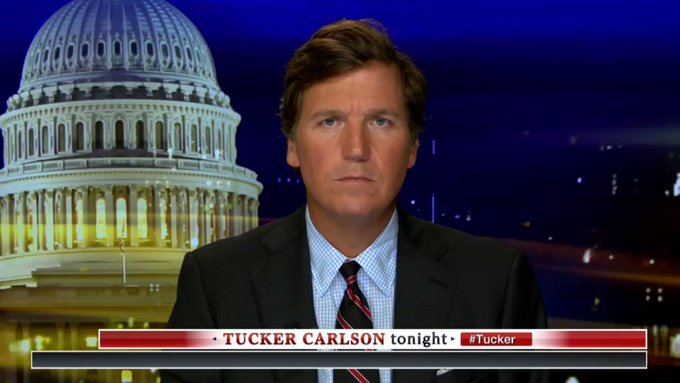
President Trump has tweeted about the issue and Tucker Carlson vowed last night to cover it fully on his show tonight.

I wonder why the national media is ignoring this story? 🤔
UPDATE: The heroic @TuckerCarlson aired a screenshot from the Detroit nursing home attack and said he would cover the "horrifying" story tomorrow night! "We're going to have a lot more on that story tomorrow and the tape."
Hayden was a patient in the nursing home, which as Chris Menahan documents, has a very shady recent history.

The culprit